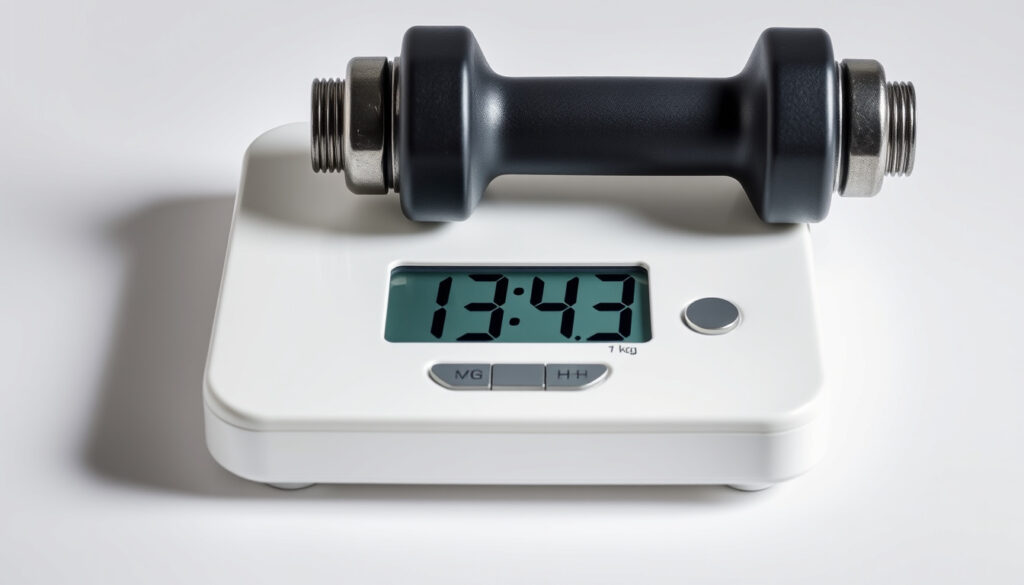
7 kg to lbs: Convert 7 Kilograms to Pounds (15.43 lbs)
Whether you’re packing a suitcase for an airline with a 7 kg limit, following a recipe that lists ingredients in different units, or trying to make sense of your baby’s weight chart from another country, you’ve needed to convert kilograms to pounds. The short answer: 7 kg equals 15.432 pounds, or roughly 1 stone 1.4 lb for UK contexts.
7 kg in pounds: 15.43 lbs · 1 kg in pounds: 2.20462 lbs · 1 stone in kg: 6.35029 kg · 7 kg in stones: 1 stone 1.6 lbs
Quick snapshot
- 7 kg = 15.432 pounds (RapidTables)
- 1 kg = 2.204622 lb exactly (Inch Calculator)
- Baby health assessments depend on multiple factors beyond weight alone
- 1960: SI system officially replaced “kilopond” (1 kp = 1 kg) with Newton (Sengpiel Audio)
- See step-by-step conversion instructions below for manual calculation
| Conversion | Value |
|---|---|
| 7 kg to lbs | 15.432 pounds |
| 7 kg to stone/lb | 1 stone, 1.6 pounds |
| Conversion factor kg→lb | × 2.20462262185 |
| 1 lb to kg | 0.45359237 kg |
| 1 stone to kg | 6.35029318 kg |
What is 7kg in weight?
The most direct answer is that 7 kilograms equals 15.432 pounds. This figure comes from multiplying 7 by the international standard conversion factor of 2.20462262185. If you prefer thinking in pounds and ounces, 7 kg converts to 15 pounds and 6.918 ounces (RapidTables conversion table).
Exact 7 kg to lbs calculation
The formula is straightforward: pounds = kilograms × 2.204622. For 7 kg specifically:
7 × 2.204622 = 15.432354 pounds, which rounds to 15.432 lbs. This level of precision matters in scientific, medical, and trade contexts where exact measurements carry legal or safety implications (Inch Calculator unit definitions).
For most everyday purposes—cooking, luggage, fitness tracking—you can safely use 15.43 lbs or simply multiply by 2.2 when doing mental math. The extra digits matter only when precision is non-negotiable.
7 kg in pounds and ounces
Breaking 15.432 lbs further: the whole number is 15 pounds, and the decimal portion (0.432) converts to ounces by multiplying by 16 (since 1 pound = 16 ounces). 0.432 × 16 = 6.912 ounces. More precise calculations from RapidTables show this as 15 lb 6.918 oz.
The pattern holds across different precision levels: 15.4 lbs, 15 lb 6.9 oz, and 15.43 lbs all represent the same weight, just expressed differently for different audiences.
What is 7kg in stones and pounds?
For UK readers, body weight is commonly expressed in stones and pounds rather than decimal pounds. One stone equals exactly 14 pounds, and 7 kg converts to approximately 1.1023 stones (Inch Calculator). To express this in familiar UK terms, you separate the whole stone (1) from the remaining decimal, which converts back to pounds.
7 kg to stones breakdown
The calculation follows two steps:
- Step 1: Divide kilograms by 6.35029318 (the number of kg in one stone). 7 ÷ 6.35029318 = 1.1023 stones
- Step 2: The whole number (1) is your stones. Multiply the decimal (0.1023) by 14 to get remaining pounds. 0.1023 × 14 = 1.432 lbs
So 7 kg equals approximately 1 stone and 1.4 pounds, which rounds to 1 stone 1.4 lb for everyday use (KGtoStone.net formula guide).
Stones and pounds chart
Official UK health charts provide stone/pound equivalents that align with this calculation. For example, NHS Scotland charts show 35 kg as 5 st 7 lb, and SAPG pharmacy tables confirm conversions like 7 st 0 lb = 44.5 kg and 5 st 7 lb = 35 kg (NHS Scotland community pharmacy chart).
| Kg | Stones | Pounds |
|---|---|---|
| 5 | 0 st | 11.02 lbs |
| 7 | 1 st | 1.4 lb |
| 10 | 1 st | 8.0 lb |
| 23 | 3 st | 8.7 lb |
| 35 | 5 st | 7 lb |
| 70 | 11 st | 0.3 lb |
The pattern across these UK health references shows consistent rounding practices: 35 kg maps to 5 st 7 lb, while 70 kg rounds to 11 st 0.3 lb, both reflecting how NHS and pharmacy charts handle conversions for patient communication.
Is 1kg equal to 1 lb?
No. A kilogram and a pound are not equivalent. One kilogram equals 2.204622 pounds, which means a kilogram is more than twice as heavy as a pound (Inch Calculator). This confusion sometimes arises because the kilogram was historically tied to a force unit, but in the modern SI system, these are distinct measures.
Key differences kg vs lb
The kilogram measures mass (or weight under gravity), while the pound measures force in most contexts. Historically, 1 kilopond (the force exerted by 1 kg under standard gravity) was exactly 1 kg, but in 1960, the SI system replaced kiloponds with Newtons—a different force unit entirely (Sengpiel Audio historical reference). Today, 1 kilogram equals 9.80665 Newtons under standard gravity.
- 1 kg = 2.204622 lb (mass equivalent)
- 1 kg under Earth gravity = 9.80665 N (force equivalent)
- 1 lb = 0.453592 kg
- 1 lb = 16 oz
In international trade, shipping, and medicine, using the wrong unit or conversion factor can mean the difference between a correctly dosed medication and a dangerous error. The avoirdupois pound (used in the US and UK) is standardized internationally, so 1 lb = 0.45359237 kg everywhere—not a regional approximation.
Conversion factor explained
The precise factor 2.20462262185 comes from the official definition linking kilograms to the international prototype kilogram (IPK) and the Planck constant. For practical use, 2.20462 is accurate enough for most applications. Some sources round to 2.205 for quick mental math, which introduces only a 0.03% error.
What is kg in stones and pounds?
Beyond the UK body weight convention, stones and pounds conversion matters in healthcare, pharmacy, and fitness contexts where UK health services operate. NHS Scotland and regional health boards publish official conversion charts that healthcare workers use daily (NHS Scotland conversion chart).
Kg to stones formula
Two formulas work depending on your starting unit:
- From kg directly: stones = kg × 0.157473 (Inch Calculator)
- From kg via division: stones = kg ÷ 6.35029318, then multiply decimals by 14 for remaining pounds
The second method gives you the full stones + pounds breakdown directly: 7 ÷ 6.35029318 = 1.1023 stones, where 1 is the whole stone and 0.1023 × 14 = 1.43 lb (The Calculator Site step-by-step method).
Common kg equivalents
Looking at the health charts published by Grampian health authorities, occupational health specialists, and UK pharmacy bodies, common weight conversions appear repeatedly in patient care. A sample from occupational health literature shows 38.1 kg = 6 st 0 lb, which aligns perfectly with the formula (38.1 ÷ 6.35029318 = 6.00 stones) (Occupational Health UK).
Is 7 kg heavy for a baby?
At around 7 kg, you’re looking at a baby roughly 10 months old, though healthy weights vary significantly based on birth weight, feeding method, genetics, and individual development patterns. Weight alone doesn’t determine health status—growth charts track weight gain velocity and proportion to length, not absolute numbers.
Average baby weights by age
WHO and national health services publish growth percentiles rather than fixed “normal” ranges. A 10-month-old at the 50th percentile typically weighs between 7 and 10 kg depending on the population reference used. Boys and girls follow different curves, with boys generally averaging slightly higher weights at the same age.
Using a single weight measurement to assess nutrition is misleading. Health professionals look at growth velocity, head circumference, and length-to-weight ratios. A baby at 7 kg might be perfectly healthy or might need nutritional support—but only a qualified health worker assessing the full growth chart can determine which.
7 kg benchmarks
For context, UK health visitors and pediatric services work from standardized charts. If you’re converting a 7 kg weight for healthcare communication between countries using different units, knowing the exact equivalent in pounds (15.43 lb) or stones and pounds (approximately 1 st 1.4 lb) ensures accurate documentation.
How to convert kg to lbs and stones manually
Whether you need to show your work for an exam, verify a conversion for medical dosing, or simply prefer not relying on a calculator app, here’s the step-by-step process:
Step 1: Kilograms to pounds
Multiply your kilograms by 2.20462. For 7 kg: 7 × 2.20462 = 15.43234 lb. Round to the precision you need (15.43 lb is standard for most uses).
Step 2: Separate pounds and ounces (optional)
Take the decimal portion (0.43234) and multiply by 16. 0.43234 × 16 = 6.91744 oz. Your result: 15 lb 6.9 oz.
Step 3: Convert to stones (UK/Australia/Ireland)
Divide kg by 6.35029318 to get stones. 7 ÷ 6.35029318 = 1.1023 stones. The whole number is your stones (1). Multiply the decimal (0.1023) by 14: 0.1023 × 14 = 1.43 lb.
Step 4: Reverse check
1 stone 1.43 lb = (1 × 14) + 1.43 = 15.43 lb. Converted back: 15.43 lb ÷ 2.20462 = 7.00 kg. The math checks out.
Different calculator tools use slightly different rounding at intermediate steps, which explains why you might see 15.432 lb, 15.435 lb, or 15.4 lb depending on the source. For trade or medical purposes, always verify which precision level and rounding method the receiving party expects.
Confirmed facts
- Exact conversion: 1 kg = 2.20462262185 lbs (international standard)
- 7 kg = 15.432 pounds, or 15 lb 6.918 oz
- 1 stone = 14 pounds = 6.35029318 kg
- 7 kg ≈ 1 stone 1.4 lb
- UK NHS and pharmacy services use official stone/pound charts
What’s unclear
- Baby health assessments depend on multiple factors beyond a single weight measurement
To convert 7 kilograms to pounds, you can use the conversion factor that 1 kilogram is equal to approximately 2.205 pounds.
— YouTube narrator, Video demonstration
Since one kilogram is equal to 0.157473 stones, you can use this simple formula to convert: stones = kilograms × 0.157473.
— Inch Calculator (Unit conversion reference)
The takeaway from all this number-crunching is simple: for most practical situations involving 7 kg, whether you’re checking luggage weight, comparing product specifications, or discussing body weight across the Atlantic, 15.43 pounds gives you everything you need. If you’re in the UK and dealing with body weight specifically, remember that 7 kg sits just over one stone—you’re carrying the equivalent of a small newborn, give or take. Knowing both numbers and when to use which puts you ahead of most people who just Google the conversion and move on.
Related reading: 3/4 Cup to mL – US and Metric Conversion Guide · How Many Acres in a Hectare – Exact Conversion and Guide
math.answers.com, sapg.scot, thecalculatorsite.com, convert-me.com
In UK contexts where stones complement kilograms and pounds, the kg to lbs to stone charts provides essential formulas and NHS-aligned guides.
Frequently asked questions
How do you convert kg to lbs?
Multiply the number of kilograms by 2.20462. For example: 7 kg × 2.20462 = 15.43 lbs. This factor comes from the international standard definition of the kilogram.
What is 5 kg to lbs?
5 kg equals 11.02 pounds (5 × 2.20462 = 11.0231, rounded to 11.02 lbs).
How much is 20 kg to lbs?
20 kg equals 44.09 pounds (20 × 2.20462 = 44.0924, rounded to 44.09 lbs).
What is 80 kg to lbs?
80 kg equals 176.37 pounds (80 × 2.20462 = 176.3696, rounded to 176.37 lbs). In stones, this is approximately 12 st 8.3 lb.
How do British people say their weight?
UK residents typically express body weight in stones and pounds. A person weighing 70 kg might say they weigh “11 stone” (11 st 0.3 lb to be precise). One stone equals 14 pounds.
What is 1 kg in stones?
1 kg equals 0.157473 stones, or approximately 0 stone 2.2 lb. To convert stones to pounds, multiply by 14.
What is 23 kg in pounds?
23 kg equals 50.71 pounds (23 × 2.20462 = 50.7063, rounded to 50.71 lbs). In UK terms, this is about 3 st 8.7 lb.
What is 1 stone equal to in kg?
1 stone equals 6.35 kg (or more precisely, 6.35029318 kg). This is also equal to 14 pounds.
More related posts
 6000 CAD to USD: Convert Canadian Dollars to US Dollars
 1000 Dollar Bill Canada – History, Status and Value
 Manchester City – Manchester United: Composition & Lineups 2025/26
 Billy Corgan: Feuds, Family, and Hidden History
 Best Car Phone Mounts for 2025: Expert Stability Picks
 Spencer Barbosa: Age, Career, TikTok Fame, and Engagement
 Best Whole House Water Filtration for E. coli & Limescale
 Dan Levy: LGBTQ, Partner, Net Worth & Big Mistakes