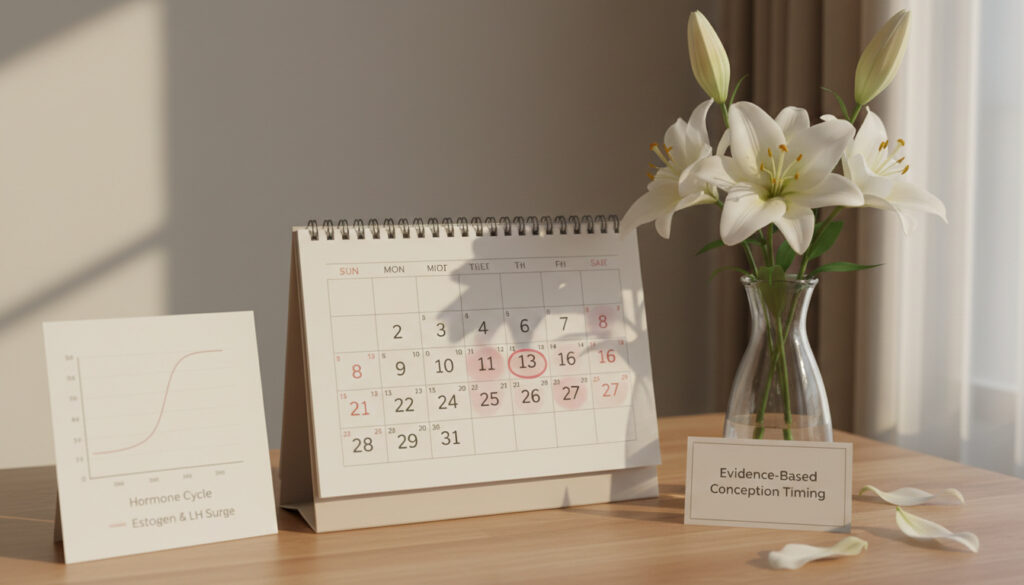
How to Get Pregnant – Evidence-Based Timing Guide
Conception depends on precise biological timing within the menstrual cycle. Understanding when your body releases an egg, combined with how long sperm survive inside the reproductive tract, creates the foundation for improving pregnancy odds within the first year of trying.
Most couples who track ovulation and time intercourse accordingly conceive within three to twelve months. However, individual timelines vary significantly based on age, underlying health conditions, and lifestyle factors that influence hormonal regularity.
This examination presents evidence-based protocols for identifying fertile windows, optimizing physical health before conception, and recognizing when medical evaluation becomes necessary.
What Are the Best Days to Get Pregnant?
The fertile period spans six days: the five days preceding ovulation plus the day of ovulation itself.
Track basal body temperature, cervical mucus changes, and hormone surges to predict egg release.
Engage in sex every one to three days during the fertile window, ideally daily or every other day.
Use ovulation predictor kits and fertility apps to validate timing predictions.
- Six-Day Window: Conception is possible only during the five days before ovulation and the day of ovulation, according to research from Natural Cycles and HealthPartners.
- Sperm Longevity: Sperm can survive inside the female reproductive tract for up to five days, allowing for intercourse before ovulation to result in conception.
- Egg Viability: The egg remains viable for only 12 to 24 hours after release, creating a narrow post-ovulation opportunity.
- Mid-Cycle Timing: Ovulation typically occurs 14 days before the next menstrual period, not necessarily on day 14 of a 28-day cycle.
- Kit Accuracy: Ovulation predictor kits detect luteinizing hormone surges 24 to 36 hours before egg release.
- Temperature Shifts: Basal body temperature rises slightly immediately after ovulation occurs, confirming the event retrospectively.
- App Efficacy: Users of temperature-based fertility applications average conception within three menstrual cycles.
| Factor | Optimal Condition | Biological Impact |
|---|---|---|
| Fertile Window Duration | 6 days per cycle | Limited conception opportunity |
| Sperm Survival | Up to 5 days | Allows pre-ovulation intercourse |
| Egg Viability | 12-24 hours post-release | Requires timely fertilization |
| Intercourse Frequency | Every 1-3 days | Maximizes sperm presence |
| Cycle Tracking Method | Calendar + BBT + mucus | Improves prediction accuracy |
| LH Surge Detection | 24-36 hours before ovulation | Optimal timing indicator |
| Post-Ovulation BBT | 0.5-1°F increase | Confirms ovulation occurred |
| Fertile Mucus | Clear, stretchy consistency | Indicates approaching ovulation |
How Can I Increase My Chances of Getting Pregnant?
What Should You Do Before Trying to Get Pregnant?
Preconception health optimization begins three months before attempting conception. Women discontinuing hormonal birth control should anticipate potential cycle irregularity for up to three months while natural rhythms reestablish. Starting prenatal vitamins containing folic acid reduces neural tube defect risks before pregnancy occurs.
Medical evaluation of existing conditions like thyroid disorders or diabetes ensures these factors do not compromise conception odds. The Mayo Clinic recommends addressing medication interactions and updating vaccinations during this preparatory phase.
Lifestyle Foundations for Fertility
Achieving a body mass index between 18.5 and 25 significantly impacts ovulatory function. Both obesity and underweight status disrupt hormonal signaling necessary for regular egg release. Smoking cessation produces measurable improvements in fertility outcomes, as tobacco exposure damages ovarian follicles and reduces sperm quality.
Research published by HealthPartners confirms that maintaining a healthy BMI reduces menstrual irregularities and improves the hormonal balance required for regular ovulation. Extreme weight fluctuations in either direction can suppress reproductive function entirely.
Alcohol consumption and recreational drug use require elimination during the preconception period. While specific dietary supplements remain under investigation, general nutritional adequacy supports endocrine function necessary for conception.
How to Get Pregnant with Irregular Periods?
Tracking Ovulation When Cycles Vary
Women with irregular menstrual cycles cannot rely on calendar calculations alone. Polycystic ovary syndrome and other endocrine disorders render standard day-counting methods unreliable. Instead, combination approaches using basal body temperature monitoring, cervical mucus observation, and ovulation predictor kits provide necessary accuracy.
The Florida Fertility Institute recommends daily OPK testing for irregular cycles, as these devices detect the luteinizing hormone surge regardless of cycle length. Continuous monitoring over several months establishes individual patterns despite variability.
Conceiving After Age 35
Fertility declines progressively after age 35, with a more rapid decrease after 40. Women over 35 should seek medical evaluation if pregnancy does not occur within six months of timed intercourse, rather than waiting the standard twelve months recommended for younger women.
Women diagnosed with polycystic ovary syndrome, endometriosis, or consistently irregular cycles should schedule preconception consultations before attempting pregnancy. These conditions often require medical intervention to induce ovulation or address structural barriers to conception.
How Often Should You Have Sex When Trying to Conceive?
Optimal Frequency During the Fertile Window
Medical authorities recommend sexual intercourse every two to three days throughout the fertile window, with daily engagement acceptable for couples preferring maximum frequency. This schedule maintains adequate sperm concentration while ensuring fresh sperm presence when the egg releases. Research from Tommy’s confirms no advantage to abstinence periods within this window.
Couples should begin this frequency pattern three to five days before anticipated ovulation and continue through one day after, covering the full six-day fertile period.
Do Sex Positions Affect Conception?
No scientific evidence supports any specific sexual position for improving conception odds. The Mayo Clinic emphasizes that timing relative to ovulation matters significantly more than mechanical factors. Similarly, lying flat after intercourse does not measurably improve sperm transport.
Since sperm survive up to five days in the reproductive tract, intercourse every other day during the fertile window maintains sufficient sperm concentrations while avoiding potential logistical stress of daily requirements. This approach proves equally effective as daily intercourse for most couples.
How Long Does It Take to Get Pregnant?
Conception timelines follow predictable patterns for healthy couples, though individual variation remains substantial. The following sequence represents typical progression through the conception journey.
- Months 1-3: Establish baseline cycle tracking, implement lifestyle modifications including smoking cessation and weight optimization, and identify individual ovulation patterns using multiple tracking methods. Source
- Months 4-6: Continue timed intercourse every two to three days during fertile windows. Women over 35 should initiate medical consultation if pregnancy has not occurred by month six. Source
- Months 7-12: Eighty to ninety percent of couples conceive within one year when timing intercourse with ovulation. Continue consistent tracking and lifestyle protocols. Natural Cycles
- Month 12+: Schedule comprehensive fertility evaluation including semen analysis and ovulation assessment. Women under 35 require evaluation after 12 months; those with irregular cycles or known conditions require earlier assessment. Source
What Does Science Confirm About Conception?
Established Evidence
- The six-day fertile window represents the only conception opportunity each cycle
- Ovulation predictor kits provide 24-36 hours advance notice of egg release
- Sperm maintain viability for up to five days in cervical mucus
- Female fertility declines measurably after age 35
- Smoking and BMI extremes disrupt ovulatory function
- Intercourse every two to three days maximizes conception probability
Remaining Uncertainties
- Specific dietary components that guarantee fertility improvement
- Exact mechanisms causing unexplained infertility in 15% of cases
- Precise day of conception within the six-day window
- Optimal frequency thresholds beyond every-other-day recommendations
- Individual variance in egg viability duration
The Biology Behind Getting Pregnant
Conception requires a single sperm penetrating the egg during its brief viable period. Following ejaculation, sperm swim through cervical mucus—which becomes thin and stretchy during the fertile window—through the uterus, and into the fallopian tubes. Fertilization typically occurs in the outer third of the fallopian tube.
The resulting embryo travels toward the uterus over several days before implanting in the uterine lining, establishing pregnancy. This biological sequence explains why timing intercourse before ovulation proves as effective as timing on the day itself, given sperm longevity. For travelers managing medical appointments during this process, checking YYZ to Las Vegas – Direct Flights Schedules and Deals may assist in coordinating consultations with specialists in different regions.
Expert Guidance on Fertility
Medical authorities emphasize evidence-based approaches over cultural myths regarding conception.
Timing intercourse to ovulation doubles odds of conception compared to random intercourse timing.
American College of Obstetricians and Gynecologists
The ACOG specifically recommends intercourse during the five days before and including ovulation day, noting that conception probability peaks when sperm are present before the egg releases. Similarly, WomensHealth.gov provides calculation tools based on these established biological principles.
Preparing for Your Conception Journey
Successful conception requires combining precise biological timing with optimal physical health. Begin by tracking your menstrual cycle using multiple methods to identify your specific fertile window, then maintain intercourse every two to three days during this period. Address lifestyle factors including weight, smoking, and alcohol consumption months before attempting conception. For those interested in recent cultural coverage while managing health research, see Kid Rock Halftime Show – Verified Facts vs Rumors. If pregnancy does not occur within twelve months for women under 35, or six months for women over 35, schedule a fertility evaluation with your healthcare provider.
Frequently Asked Questions
How soon after sex can you get pregnant?
Conception can occur immediately if intercourse happens during the fertile window, as sperm reach the fallopian tubes within minutes. However, fertilization only happens if the egg is present or arrives within the sperm’s five-day survival window.
What should you avoid when trying to conceive?
Eliminate smoking, recreational drugs, and excessive alcohol consumption. Avoid extreme dieting or exercise that disrupts menstrual regularity. Stop using lubricants that contain spermicides or have high acidity, which can impair sperm motility.
What are the early signs you are pregnant after trying?
Early pregnancy signs include missed periods, breast tenderness, fatigue, and nausea. However, these symptoms mimic premenstrual syndrome, making home pregnancy tests the only reliable confirmation method after a missed period.
What foods support fertility?
While no specific food guarantees conception, diets rich in folate, iron, and omega-3 fatty acids support overall reproductive health. Focus on whole grains, leafy greens, and adequate protein while maintaining a healthy BMI through balanced nutrition.
How can male partners improve fertility?
Male partners should maintain healthy weight, avoid excessive heat exposure to the groin area, limit alcohol, and quit smoking. These factors affect sperm count and motility, which are essential for conception.
Can you get pregnant outside the fertile window?
No. Pregnancy requires sperm presence during the six-day fertile window ending on ovulation day. Intercourse at other times during the cycle cannot result in conception due to the egg’s 12-24 hour viability limit.
More related posts
 World Cup Groups 2026: Table, Teams, Pots & Standings
 Kid Rock Halftime Show – Verified Facts vs Rumors
 Best Tapas Boquerones Near Me: Galway & Cork Guide
 Opening Ceremony Olympics 2026 Time: Schedule, TV & Stream
 Words With Friends Cheat: Best Free Apps, Codes & Tips to Win
 1000 Dollar Bill Canada – History, Status and Value
 Dead to Me Cast: Actors, Characters & Behind the Scenes
 Best Pots and Pans Set in Ireland: IKEA vs Dunnes