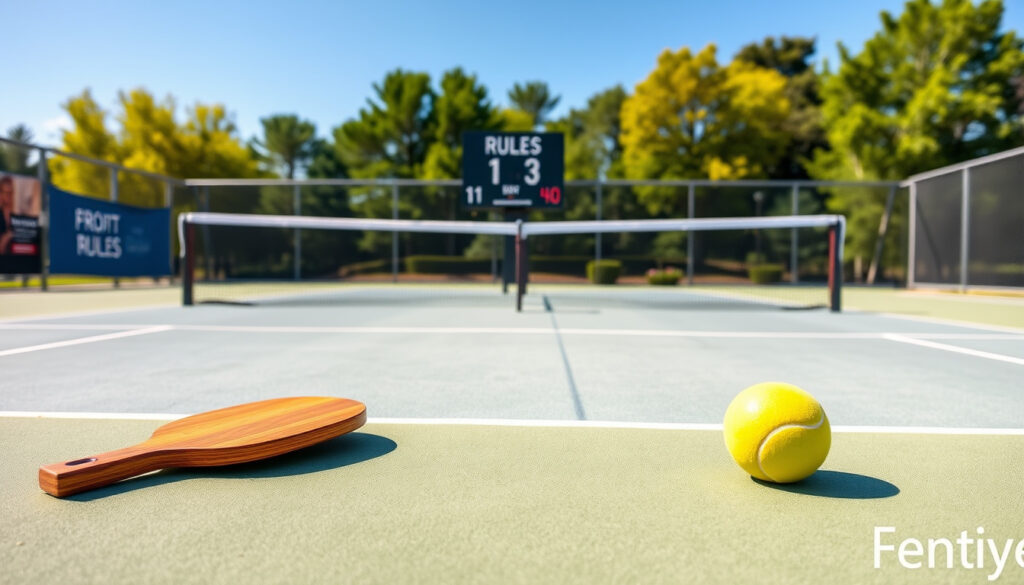
How to Play Pickleball: Rules, Scoring & Beginner Guide
If you’ve ever watched a pickleball rally and wondered how players move so seamlessly between offense and defense, you’re not alone. The sport blends the accessibility of ping-pong with enough strategic depth to keep competitive players engaged for years. This guide walks through everything a beginner needs to step onto the court with confidence—from the serve mechanics to the scoring nuances that separate casual games from tournament play.
Court Size: 20×44 feet ·
Players per Game: 2–4 ·
Serve Type: Underhand ·
Points to Win: 11 (win by 2) ·
Non-Volley Zone: 7 feet from net
Quick snapshot
- Games end at 11 points with a 2-point margin (Pickleheads)
- Underhand serves must strike the ball below waist level (DUPR)
- The double bounce rule requires one bounce on each side before volleying (DUPR)
- Health impact specifics for seniors or patients with specific conditions lack independent clinical study
- Tournament tiebreak procedures vary by organization
- Rally scoring options expand for USAP-sanctioned Round-Robin and Team Play formats
- Doubles rally scoring available for tournament directors starting 2025
The table below consolidates essential pickleball specifications from official governing bodies and verified sources.
| Attribute | Value |
|---|---|
| Invented By | Joel Pritchard, 1965 |
| Governing Body | USA Pickleball |
| Official Rules Source | usapickleball.org |
| Typical Game Length | 15–30 minutes |
| Standard Points to Win | 11 (win by 2) |
| Tournament Points | 15 or 21 (win by 2) |
| First Server Start Call | 0-0-2 |
| USAP Rally Scoring Recognition | 2025 |
What are the 5 rules of pickleball?
Court and equipment basics
A pickleball court measures 20×44 feet, matching a badminton court’s footprint. The non-volley zone—commonly called the kitchen—extends 7 feet from the net on each side. Players need a paddle, plastic balls designed for indoor or outdoor use, and appropriate court shoes. Optional equipment includes protective eyewear, particularly recommended for senior players.
Serving rules
The serve must be underhand, meaning the ball is struck below waist level with an upward motion. The server stands behind the baseline and serves diagonally into the opposite service box. One serve attempt is allowed per rotation. The player on the right side of the court always starts the serve, and the first server announces “0-0-2” at game start because the starting team receives only one serve.
Scoring system
In traditional side-out scoring, only the serving team can score points. Games are played to 11 points with a mandatory 2-point winning margin. Tournament games may extend to 15 or 21 points while maintaining the same 2-point requirement. In doubles, the scoring announcement contains three numbers: the serving team’s score, the receiving team’s score, and which server is active (1 or 2).
Non-volley zone
Players cannot volley—hit the ball in the air without letting it bounce—while standing inside the kitchen or with any part of their body or paddle extending into the non-volley zone. The ball may bounce in the kitchen, and players may enter the zone after the ball has bounced. This rule prevents players from dominating at the net and keeps rallies dynamic.
Double bounce rule
The ball must bounce once on each side before players can begin volleying. This means the receiving team must let the served ball bounce, and then the serving team must let the return bounce before either side can attack the ball in the air. The rule creates longer rallies and gives beginners more time to reach the ball.
Is pickleball hard for beginners?
Basic skills needed
Pickleball rewards hand-eye coordination more than athletic prowess, making it unusually accessible. The underhand serve eliminates the steep learning curve associated with tennis serves. Most beginners can sustain a rally within their first session, which provides immediate gratification and encourages continued play.
Learning curve compared to other sports
The game borrows elements from tennis, badminton, and ping-pong, meaning players with any racquet sport experience often adapt quickly. Court positioning rules require attention but follow logical patterns. According to Selkirk Sport, the serving team scores the only points, which simplifies score tracking compared to sports where both sides can score on every rally.
Tips to start quickly
Practice the underhand serve motion without a ball first. Focus on keeping your paddle face flat and contact the ball at waist level. When returning shots, aim for consistency over power—placement wins more games at recreational levels than aggressive shots that land out of bounds.
How to play pickleball scoring
When points are scored
Only the serving team scores in traditional side-out scoring. When the serving team wins a rally, they earn a point and continue serving. When the receiving team wins a rally, they do not score—they earn the serve instead. This system rewards serving skill and creates strategic pressure on the serving team.
Side out rules
When the serving team loses a rally, the serve passes to their teammate (the second server) before a side out occurs. Only after both servers on a team have lost their serves does the serve pass to the opposing team. The receiving team must get “side down” and win the serve back before they can begin scoring points.
Winning the game
A game ends when one team reaches 11 points with a margin of at least 2 points. If the score reaches 10-10, play continues until one team achieves a 2-point advantage. At 11 with a 2-point margin, the game concludes immediately regardless of serve position.
How to play pickleball singles
Differences from doubles
Singles pickleball mirrors doubles rules with one significant adjustment: there is only one server per rotation instead of two. Each player covers the entire court, which demands more endurance and strategic positioning than doubles where partners split coverage responsibilities.
Positioning and strategy
The server moves to the left side after winning a rally, alternating courts with each point scored. The receiver adjusts position based on serve direction. Court positioning follows a clear rule: when the server’s score is even, they serve from the right court; when odd, they serve from the left court.
Serving sequence
In singles scoring, the first number represents the server’s score and the second represents the receiver’s score. Players must verbally call their score before serving. The server announces a two-number sequence rather than the three-number format used in doubles. Only one serve attempt is permitted per rotation.
What are 5 things you cannot do in pickleball?
Faults to avoid
A fault ends the rally immediately. Common faults include serves landing outside the service area, balls landing out of bounds, balls hitting the net on the server’s side of the court, and balls bouncing twice on one side. According to Pickleheads, the serving team loses the rally on any of these infractions, while the receiving team loses the rally if they commit a fault.
Non-volley zone violations
Volleying while inside the kitchen or touching the kitchen line with any part of your body or paddle results in a fault. Players must keep both feet grounded outside the non-volley zone when hitting an airborne ball. Momentum that carries a player into the zone after a volley also constitutes a fault.
Common beginner mistakes
Overhead serves are illegal—the ball must be struck below waist level with an upward motion. Carrying or catching the ball rather than striking it cleanly results in a fault. Stepping on or over the baseline during the serve, intentionally distracting an opponent, and failing to call the score before serving are additional violations that cost beginners points.
Upsides
- Low impact on joints, suitable for older adults
- Underhand serve accessible for all skill levels
- Double bounce rule extends rallies for practice
- Court size comparable to badminton—manageable to cover
- Social aspect strong in doubles format
Downsides
- Kitchen rule requires precise foot positioning
- Side-out scoring can frustrate receivers who never score
- Limited court availability in some regions
- Paddle selection confusing for beginners
- Noise complaints in residential areas
For recreational players, pickleball offers one of the lowest barriers to entry of any court sport. The underhand serve and kitchen rule work together to extend rallies and keep all participants engaged, regardless of fitness level or previous athletic experience.
How to play pickleball step by step
Whether you’re stepping onto a pickleball court for the first time or helping a friend learn the game, these steps outline the sequence from warm-up through game completion.
- Gather equipment. You need a paddle, plastic pickleball, and access to a properly marked court. Indoor and outdoor balls differ in hole size—outdoor balls have smaller holes to resist wind.
- Understand court layout. Identify the baseline, sidelines, centerline, non-volley zone (kitchen), and service boxes. The court resembles a badminton court at 20×44 feet.
- Determine format. Singles uses one server per rotation covering full court. Doubles uses two servers per team, with partners positioned diagonally on each serve.
- Position for the serve. The server stands behind the baseline on the correct side based on their score. Even score means right court position; odd score means left court position.
- Announce and execute the serve. In doubles, call out three numbers: your score, opponent’s score, and server number. Strike the ball below waist level with an upward motion, landing it diagonally in the opposite service box.
- Allow the double bounce. The receiving team must let the served ball bounce once before returning it. The serving team must then let the return bounce once before volleying.
- Continue the rally. After both bounces occur, teams may volley or play groundstrokes. Keep the ball in bounds and avoid volleying inside the kitchen.
- Track scoring. Only the serving team scores. When the serving team wins a rally, announce your new score and continue serving. When you lose a rally, either your partner serves or a side out occurs.
- Win the game. First team to 11 points with a 2-point margin wins. If tied at 10-10, play continues until one team achieves a 2-point lead.
The double bounce rule is what makes pickleball uniquely accessible. It gives slower players extra time to reach the ball and prevents advanced players from dominating at the net from the first serve.
What experts say
Selkirk Sport (Equipment manufacturer and educational resource)
Only the serving team can score a point by winning a rally.
USA Pickleball (Official governing body)
Traditional/Side-Out scoring is still the official method of scoring pickleball games. In 2025, USAP provisionally recognized the introduction of rally scoring for both singles and certain doubles formats.
The kitchen rule creates the game’s most frequent disputes. A player who lunges for a volley and lands with momentum inside the non-volley zone—even momentarily—commits a fault, even if the ball was struck cleanly.
Related reading: NHL All-Star Skills Competition · NBA Schedule 2025-26
avalonbeachpickleball.org.au, dummies.com, youtube.com, youtube.com, ppatour.com, youtube.com
For a fresh perspective on the fundamentals, Scandinavian players rely on the Norwegian pickleball rules guide which mirrors standard scoring and serve rules.
Frequently asked questions
How do you serve in pickleball?
The serve must be underhand, with the ball struck below waist level using an upward motion. Stand behind the baseline and serve diagonally into the opposite service box. Announce your score (two numbers in singles, three in doubles) immediately before serving. You receive one serve attempt per rotation in recreational play.
What is the non-volley zone?
The non-volley zone, called the kitchen, extends 7 feet from the net on each side. Players cannot volley the ball while standing inside this area or with any part of their body extending into it. The ball may bounce within the kitchen, and players may enter after completing a volley.
Can beginners play doubles?
Absolutely. Doubles is the most common format and accommodates varying skill levels within a partnership. Partners can cover each other’s weaknesses, and the social dynamic makes doubles ideal for beginners learning the game with friends or family.
What equipment do I need to start?
A pickleball paddle, plastic ball (outdoor balls have smaller holes), and court access are essential. Court shoes provide proper traction. Protective eyewear is optional but recommended for players over 60. Many community centers offer paddle and ball rentals for first-time players.
How is a pickleball game won?
Games are played to 11 points with a mandatory 2-point winning margin. If the score reaches 10-10, play continues until one team leads by 2. Tournament games may use 15 or 21 points but maintain the same 2-point margin requirement.
What is the double bounce rule?
The ball must bounce once on each side before players may volley. The receiving team must let the serve bounce, and the serving team must let the return bounce before attacking. This rule extends rallies and levels the playing field between beginners and advanced players.
Where can I find places to play?
Local community centers, YMCA facilities, and parks departments commonly offer pickleball courts. Many tennis facilities have converted courts or added pickleball lines. Pickleheads and similar platforms maintain directories of courts by location.
USA Pickleball’s 2025 provisional recognition of rally scoring introduces an alternative scoring format for sanctioned tournaments. Recreational players should monitor how this option influences local league play and whether their community adopts the new format.
Related reading
- USA Pickleball Official Scoring Guidelines
- Pickleheads Beginner’s Guide
- DUPR Pickleball Rules 101
- PaddleTek Scoring Guide
For beginners stepping onto a pickleball court, the decision is straightforward: focus on consistent serves, respect the kitchen boundary, and let the ball bounce twice before attacking. These three habits eliminate the most common beginner faults and set the foundation for steady improvement. Whether you play singles or doubles, the core mechanics remain constant—master them in casual games, and tournament play becomes a natural progression rather than a steep climb.
More related posts
 Cambio Dolar Canadiense a Quetzales (CAD to GTQ) Rate
 Google Find My Device: Locate, Lock, or Era e Lo t Phone
 David Muir: Salary, Net Worth, Personal Life & Career Facts
 Dead to Me Cast: Actors, Characters & Behind the Scenes
 Dale Earnhardt Jr: Grave Feud, Plane Crash, Early Retirement
 How to Measure Bra Size at Home: Guide & Charts
 200 Pounds to CAD – Live Rate and Conversion Guide
 Toronto Raptors vs Charlotte Hornets: Player Stats Nov 17